


Oracle HCM and ERP Cloud applications operate on a continuous innovation model, delivering quarterly updates that introduce new features, functional enhancements, security patches, and regulatory changes. While this model accelerates innovation, it also places significant pressure on enterprise testing teams. Each update has the potential to impact payroll accuracy, financial close cycles, procurement workflows, integrations, and custom extensions. Traditional manual test case creation struggles to keep pace with this frequency, often resulting in incomplete coverage, delayed validation, or excessive reliance on regression buffers. AI-driven test case generation has emerged as a critical enabler, helping organizations validate Oracle Cloud updates faster, more accurately, and with greater confidence.
In this blog we’ll cover
- Limitations Of Traditional Test Case Design
- What Is AI-Driven Test Case Generation?
- How AI Interprets Oracle Cloud Updates
- Intelligent Coverage Across HCM And ERP Processes
- Continuous Learning From Defects And Outcomes
- Business Benefits: Speed, Accuracy, And Confidence
- The Future Of Testing In Oracle Cloud Ecosystems
Limitations Of Traditional Test Case Design
Conventional test case design in Oracle HCM and ERP environments relies heavily on static scripts, historical scenarios, and manual interpretation of release notes. Test assets are often created once and reused across cycles with minimal optimization. This approach introduces several risks. First, it fails to adapt to changing business rules embedded in quarterly updates. Second, it over-tests stable areas while missing edge cases introduced by new functionality. Third, manual test creation is resource-intensive, requiring deep functional expertise and weeks of preparation. As Oracle environments grow more complex with extensions, integrations, and localized configurations, traditional testing becomes both inefficient and error-prone.
What Is AI-Driven Test Case Generation?
AI-driven test case generation uses machine learning, natural language processing, and pattern recognition to automatically design, optimize, and prioritize test scenarios. Instead of relying solely on human interpretation, AI analyzes multiple data sources such as Oracle release documentation, application metadata, historical defect logs, transaction usage patterns, and configuration changes. The system then generates intelligent test cases that align with real business behavior. In Oracle HCM and ERP Cloud, this means test cases that reflect actual payroll runs, hire-to-retire journeys, procure-to-pay flows, record-to-report cycles, and integration touchpoints affected by each update.
How AI Interprets Oracle Cloud Updates
One of the strongest advantages of AI is its ability to understand unstructured information. Oracle quarterly release notes are extensive and often complex, making manual analysis time-consuming. AI models can parse these documents, identify impacted modules, and map changes to existing business processes. For example, an update affecting payroll calculation logic can automatically trigger new test scenarios for retro pay, deductions, and statutory reporting. Similarly, enhancements in General Ledger or Payables can lead to auto-generated reconciliation and validation cases. By linking release content directly to business impact, AI ensures no critical change goes untested.
Intelligent Coverage Across HCM And ERP Processes
AI-driven test case generation excels at achieving balanced test coverage. In Oracle HCM, it can generate scenarios across core HR, payroll, time and labor, benefits, talent management, and security roles. In Oracle ERP, it covers financials, procurement, projects, supply chain, and tax. AI learns from transaction volumes and user behavior to prioritize high-risk and high-usage flows. It also identifies negative and boundary scenarios that human testers often overlook. The result is a test suite that is not only comprehensive but also optimized to focus on what truly matters to business continuity.
Continuous Learning From Defects And Outcomes
Unlike static test repositories, AI systems improve with every testing cycle. When defects are detected during Oracle Cloud update testing, AI analyzes their root causes and patterns. Over time, it learns which configurations, data combinations, or integrations are more prone to failure. This intelligence feeds back into future test generation, automatically strengthening weak areas. For example, if past updates caused issues in payroll costing or intercompany accounting, AI increases test depth in those areas. This continuous learning loop transforms testing from a reactive activity into a proactive risk-mitigation strategy.
Business Benefits: Speed, Accuracy, And Confidence
The business impact of AI-driven test case generation is significant. Testing cycles shrink from weeks to days, enabling organizations to validate Oracle quarterly updates well before production deadlines. Test accuracy improves as AI eliminates human bias and oversight. Functional consultants and business users gain confidence knowing that real-world scenarios are being validated, not just theoretical cases. IT teams benefit from reduced rework, fewer production incidents, and better alignment between testing and business outcomes. Ultimately, AI allows enterprises to adopt Oracle Cloud innovation faster without compromising stability or compliance.
The Future Of Testing In Oracle Cloud Ecosystems
As Oracle continues to expand automation, embedded analytics, and AI features within its Cloud applications, testing strategies must evolve in parallel. AI-driven test case generation is no longer a futuristic concept but a practical necessity for enterprises running Oracle HCM and ERP at scale. Organizations that embrace this approach will move beyond checklist-based testing toward intelligent, data-driven validation. In the future, testing will be continuous, predictive, and deeply integrated into release management. AI will not replace human expertise but will augment it, enabling teams to focus on strategy, governance, and innovation while ensuring Oracle Cloud updates are delivered with confidence and control.
Tags
Related Post
Navigating Oracle Fusion HCM & Payroll Patch 25C: Key Issues And Solutions For UK Local Councils
July 26th, 2025 10 min read
Learning And Talent Management With Cornerstone OnDemand
October 10th, 2025 17 min read
7 Proven Oracle Fusion Testing Principles To Guarantee Defect-Free Cloud Deployments
May 16th, 2025 15 min read
7 Reasons Why Companies Are Moving From Taleo To Oracle Recruiting Cloud
June 2nd, 2025 14 min read
Navigating Oracle Fusion HCM & Payroll Patch 25A: Key Considerations For UK Local Councils
July 27th, 2025 10 min read
WEEKEND READS
Navigating Oracle Fusion HCM & Payroll Patch 25C: Key Issues And Solutions For UK Local Councils
July 26th, 2025 10 min read
7 Proven Oracle Fusion Testing Principles To Guarantee Defect-Free Cloud Deployments
May 16th, 2025 15 min read
7 Reasons Why Companies Are Moving From Taleo To Oracle Recruiting Cloud
June 2nd, 2025 14 min read
Navigating Oracle Fusion HCM & Payroll Patch 25A: Key Considerations For UK Local Councils
July 27th, 2025 10 min read
Driving Compliance And Security With Smart Testing In Oracle Fusion
June 5th, 2025 9 min read
How End-to-End Testing Of Oracle Fusion Enhances Operational Efficiency In Banking
May 23rd, 2025 11 min read
Data Migration Best Practices: From Taleo To Oracle Recruiting Cloud
May 28th, 2025 13 min read
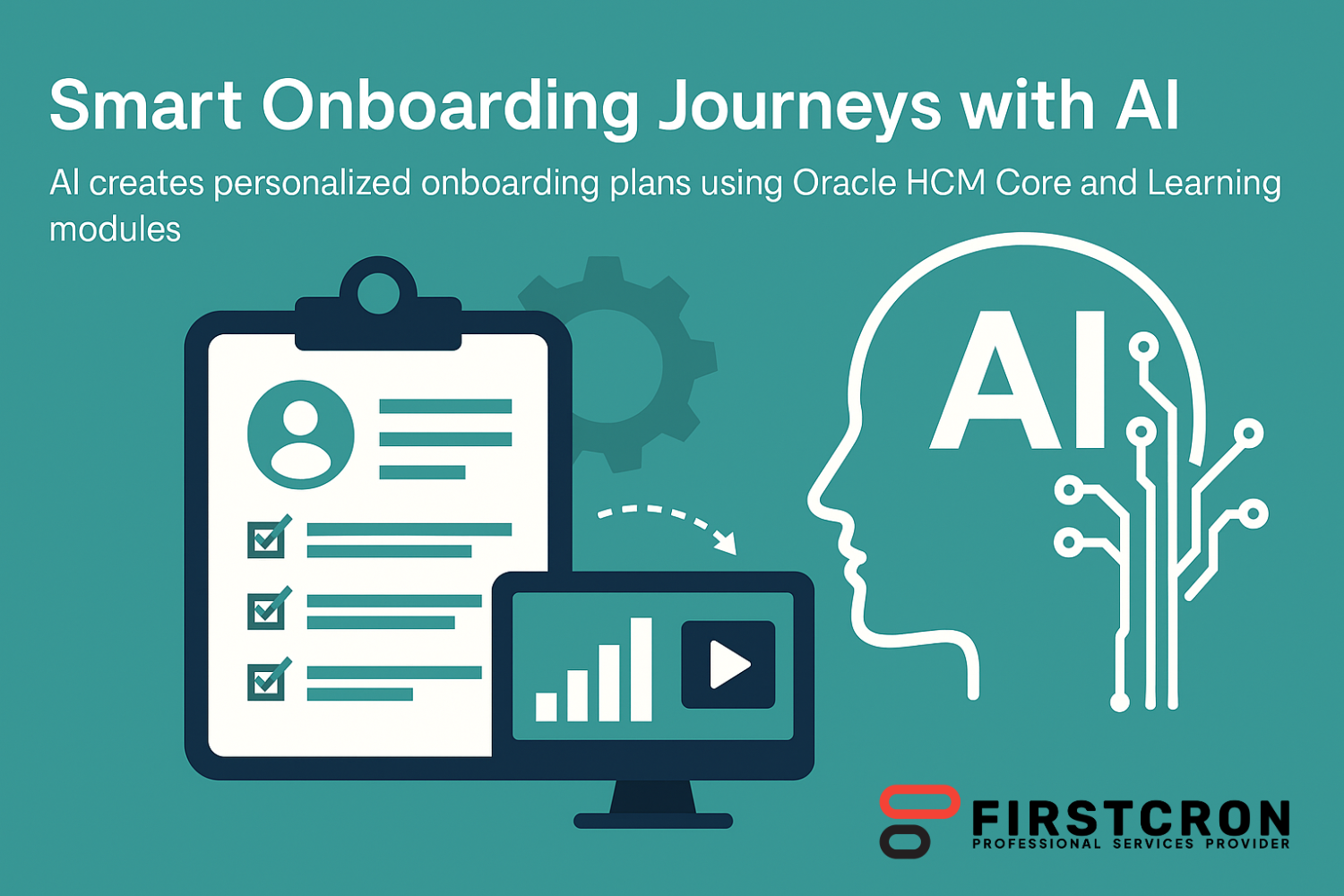
Smart Onboarding Journeys With AI: Personalized Employee Integration Through Oracle HCM Core And Learning
September 13th, 2025 21 min read
Future Proofing Enterprise Testing: The Role Of AI Driven Automation In Oracle Fusion
June 26th, 2025 7 min read