


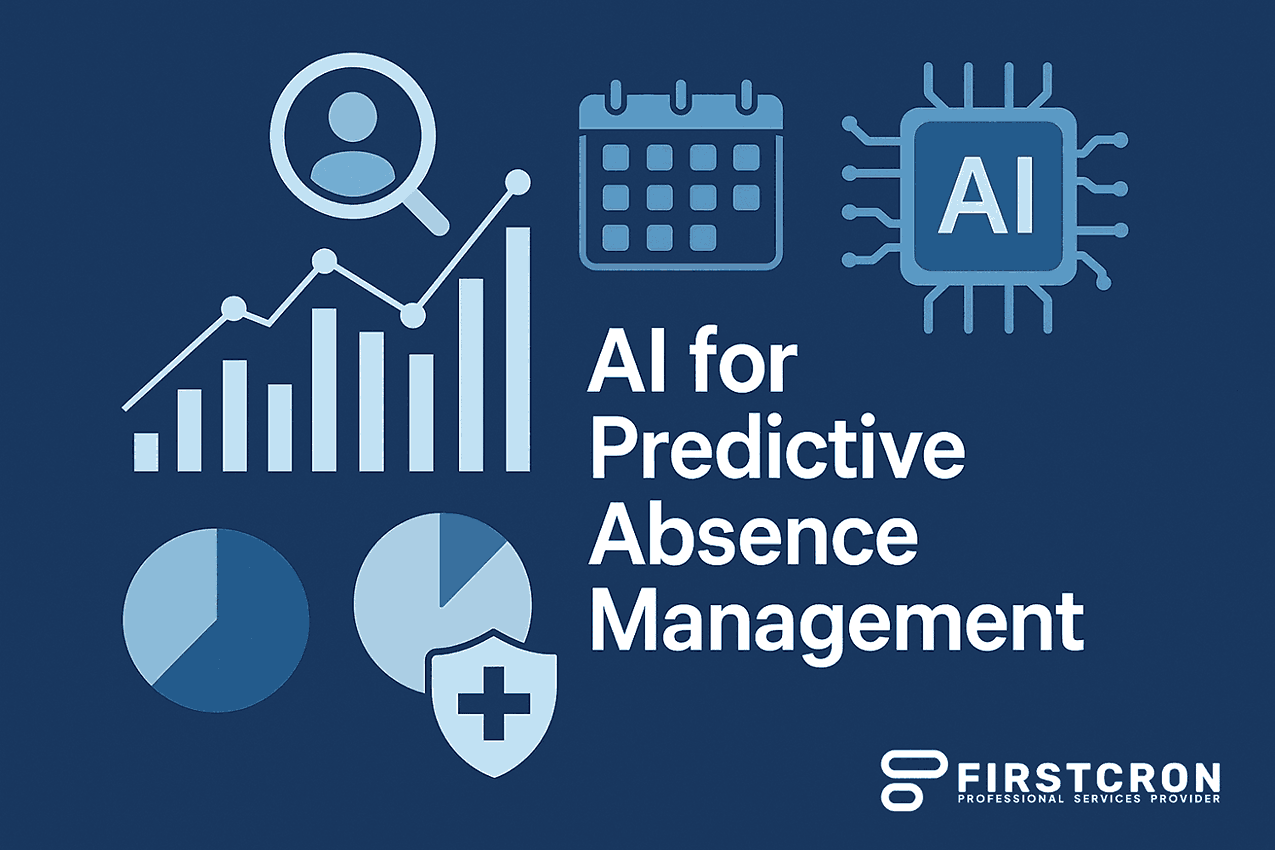
Employee absence has long been a challenge for organizations, particularly in the public sector where service continuity directly impacts citizens. Local councils, healthcare institutions, and educational bodies depend on reliable attendance to deliver essential services. However, absenteeism—whether due to illness, stress, or unplanned leave—creates ripple effects that disrupt workflows, increase costs, and burden remaining employees. Traditional absence management is reactive: HR teams notice patterns only after problems arise, leaving little opportunity for proactive intervention. Predictive absence management, powered by generative AI (GenAI), is revolutionizing this approach. By forecasting absence trends and suggesting interventions, AI enables organizations to minimize disruption, protect employee wellbeing, and enhance productivity.
In this blog we’ll cover
- Moving Beyond Reactive Absence Tracking
- How GenAI Forecasts Absence Trends
- Benefits Of AI In Absence Management
- Practical Applications In Local Councils
- Comparative View: Traditional Vs. Predictive Absence Management
- Building A Culture Of Proactive Wellbeing
- Challenges And Ethical Considerations
- Future Potential Of Predictive Absence AI
- Conclusion: Smarter Absence Management For Resilient Organizations
Moving Beyond Reactive Absence Tracking
Historically, HR systems have tracked absence retrospectively. Monthly reports and year-end summaries highlighted lost days and absenteeism rates, but they offered little insight into the causes or future risks. This reactive stance meant HR departments were constantly firefighting: arranging last-minute cover, reassigning workloads, and addressing employee burnout. Predictive absence management turns this model on its head. Instead of focusing solely on what has already happened, AI-powered systems analyze patterns in absence data, overtime records, seasonal fluctuations, and workforce demographics to forecast potential future absence spikes. Armed with this knowledge, councils and organizations can plan staffing more effectively, deploy preventative measures, and reduce the costly impact of absenteeism.
How GenAI Forecasts Absence Trends
Generative AI uses machine learning models trained on historical HR data to recognize recurring absence patterns. For example, certain departments may experience higher sickness absence during winter months due to flu outbreaks, while other roles may see increased stress-related absence following seasonal workload peaks. GenAI considers variables such as overtime frequency, leave requests, employee age groups, and even external data like public health statistics. Once trends are identified, AI generates recommendations tailored to organizational needs—whether that means adjusting staffing rosters, offering wellness programs, or planning targeted interventions. Unlike static reports, GenAI continuously learns from new data, improving its accuracy and relevance over time.
Benefits Of AI In Absence Management
The introduction of predictive AI into absence management delivers a wide range of advantages. First, it empowers HR teams with foresight, shifting absence management from reactive to preventative. Second, it optimizes workforce planning, ensuring that staffing levels remain resilient even during high-risk periods. Third, it reduces the cost of absenteeism by preventing the need for expensive overtime or temporary cover. Finally, it enhances employee wellbeing, as interventions are designed to address root causes of absence rather than penalizing staff.
Here are the core benefits of predictive absence management:
- Forecasting Accuracy: Identifies likely absence spikes before they occur.
- Operational Continuity: Minimizes disruption to critical services.
- Employee Support: Generates interventions that prioritize wellbeing.
- Cost Savings: Reduces reliance on emergency staffing solutions.
- Strategic Planning: Allows HR to align absence insights with long-term workforce strategy.
Practical Applications In Local Councils
Local councils face particular challenges in absence management due to their wide-ranging services. For example, frontline waste collection teams may face physical strain leading to injury-related absence, while administrative staff may experience stress-related absence during budget planning cycles. GenAI can detect these department-specific patterns and recommend tailored strategies. In healthcare and social care services, predictive AI can highlight seasonal risks such as flu or COVID-related absences, enabling councils to recruit temporary staff in advance. These proactive measures not only reduce disruption but also demonstrate a commitment to employee health and public accountability.
Comparative View: Traditional Vs. Predictive Absence Management
The following table illustrates the differences between traditional absence management and predictive AI-driven absence management across three key dimensions:
| Dimension | Traditional Absence Management | Predictive Absence Management With AI |
|---|---|---|
| Approach | Reactive—focuses on past absence data and reports | Proactive—forecasts future trends using AI and predictive analytics |
| Impact on Workforce | Increased stress due to last-minute cover and poor planning | Reduced stress through planned interventions and workload balancing |
| Organizational Outcomes | Higher costs, reduced service continuity, reactive culture | Lower costs, improved resilience, proactive culture |
Building A Culture Of Proactive Wellbeing
Predictive absence management is not simply a tool for cutting costs. At its heart, it reflects a cultural shift toward valuing employee wellbeing and planning for sustainability. By using AI to anticipate challenges, councils and organizations demonstrate a commitment to supporting their workforce. Instead of blaming employees for absence, managers can engage in constructive conversations, provide resources, and adjust policies based on AI insights. Over time, this fosters a culture of trust where employees feel supported, and absenteeism is addressed as a shared responsibility rather than an individual failing.
Challenges And Ethical Considerations
As with all AI-driven initiatives, predictive absence management must navigate challenges carefully. Data privacy is paramount; employee records must be safeguarded, and GDPR compliance strictly maintained. Transparency is also critical—employees must understand how their data is being used and for what purpose. Ethical considerations include ensuring AI recommendations do not stigmatize employees or create pressure to attend work when unwell. Instead, insights must be applied to enhance fairness and wellbeing. Another challenge lies in ensuring managers interpret AI forecasts responsibly. Predictions should inform decision-making, not dictate it, and human oversight remains essential.
Future Potential Of Predictive Absence AI
The future of predictive absence management promises even greater sophistication. Integration with wearable technology could provide real-time health indicators, allowing organizations to forecast absence risks with unprecedented accuracy. AI could also model the impact of external events, such as pandemics, extreme weather, or economic shifts, on absence rates. Over time, these systems could evolve into comprehensive workforce resilience platforms, providing councils with holistic insights that go beyond absence management into broader areas of workforce health, engagement, and productivity.
Conclusion: Smarter Absence Management For Resilient Organizations
AI for predictive absence management represents a transformative step forward for organizations struggling with the costs and challenges of absenteeism. By forecasting trends and generating actionable interventions, GenAI empowers councils and businesses to move from reactive firefighting to proactive planning. This not only reduces costs and disruption but also supports a culture of employee wellbeing and trust. While challenges around ethics and governance remain, the potential of predictive absence AI to enhance organizational resilience is undeniable.
For councils and organizations ready to reduce the impact of absenteeism and embrace smarter HR strategies, the journey begins with predictive analytics. To learn more about how AI can modernize workforce management, visit firstcron.com.
Tags
Related Post
Navigating Oracle Fusion HCM & Payroll Patch 25C: Key Issues And Solutions For UK Local Councils
July 26th, 2025 10 min read

7 Proven Oracle Fusion Testing Principles To Guarantee Defect-Free Cloud Deployments
May 16th, 2025 15 min read
Navigating Oracle Fusion HCM & Payroll Patch 25A: Key Considerations For UK Local Councils
July 27th, 2025 10 min read
7 Reasons Why Companies Are Moving From Taleo To Oracle Recruiting Cloud
June 2nd, 2025 14 min read

How End-to-End Testing Of Oracle Fusion Enhances Operational Efficiency In Banking
May 23rd, 2025 11 min read
5 Business Benefits Of Investing In AI-Powered Performance Oracle Fusion Testing
May 5th, 2025 11 min read
WEEKEND READS
Navigating Oracle Fusion HCM & Payroll Patch 25C: Key Issues And Solutions For UK Local Councils
July 26th, 2025 10 min read
7 Proven Oracle Fusion Testing Principles To Guarantee Defect-Free Cloud Deployments
May 16th, 2025 15 min read
Navigating Oracle Fusion HCM & Payroll Patch 25A: Key Considerations For UK Local Councils
July 27th, 2025 10 min read
How End-to-End Testing Of Oracle Fusion Enhances Operational Efficiency In Banking
May 23rd, 2025 11 min read
5 Business Benefits Of Investing In AI-Powered Performance Oracle Fusion Testing
May 5th, 2025 11 min read

Driving Compliance And Security With Smart Testing In Oracle Fusion
June 5th, 2025 9 min read

Future Proofing Enterprise Testing: The Role Of AI Driven Automation In Oracle Fusion
June 26th, 2025 7 min read


How Cloud-Based Testing With Firstcron Can Improve Your Business
June 9th, 2025 12 min read

Testing Oracle Financials: Ensuring Accuracy In Your Critical Transactions
June 19th, 2025 8 min read