


Oracle Fusion Cloud environments are dynamic by design. Every quarter, Oracle releases mandatory updates that introduce new features, security changes, bug fixes, and functional adjustments across Finance, HCM, SCM, Payroll, and other modules. While these updates drive innovation, they also create a continuous compliance challenge for organizations that must ensure business processes, controls, and regulatory requirements remain intact.
Traditional validation methods rely heavily on manual testing, spreadsheets, and ad-hoc sign-offs. Teams log in, repeat known scenarios, take screenshots, and document results by hand. This approach may work for small environments, but it quickly becomes unsustainable as system complexity, regulatory scrutiny, and release frequency increase. FusionCheck was designed to address this exact gap—bringing automation, consistency, and audit readiness into Oracle Fusion compliance validation.
In this blog we’ll cover
FusionCheck: Built For Automated Compliance Validation
FusionCheck takes a fundamentally different approach. Instead of relying on manual repetition, FusionCheck automates validation by recording real Oracle Fusion business flows and converting them into reusable, executable scripts. These scripts represent how the system is actually used—logins, transactions, approvals, postings, and validations—rather than abstract test cases.
When Oracle deploys a quarterly update, FusionCheck simply replays these recorded flows in the updated environment. Each step is executed the same way, every time, without variation. The system captures results automatically, including timestamps, execution status, and screenshots at key checkpoints. This creates a consistent, repeatable validation process that does not depend on individual testers or manual documentation.
By embedding compliance validation directly into automation, FusionCheck transforms testing from a reactive activity into a controlled, predictable process.
Audit Readiness: Evidence By Design, Not By Effort
One of the biggest differences between FusionCheck and traditional validation is how audit evidence is produced. In manual approaches, evidence is something teams scramble to assemble after testing is complete—often weeks or months later—when auditors ask for proof.
FusionCheck generates audit-ready evidence automatically as part of execution. Every run produces structured outputs that show exactly what was tested, when it was tested, and what the outcome was. Screenshots are tied directly to steps, eliminating ambiguity. Reports are standardized, making them easy to share with auditors, compliance teams, and business stakeholders.
This shift from “evidence collection” to “evidence generation” is critical. It removes subjectivity, reduces preparation time, and ensures that compliance documentation is always complete, consistent, and defensible.
Scalability And Sustainability Across Quarterly Updates
Oracle Fusion environments do not stand still. As organizations grow, add modules, expand geographies, or integrate new processes, the scope of compliance validation increases. Traditional methods scale linearly with effort—more modules mean more people, more time, and more risk.
FusionCheck scales differently. Once a flow is recorded, it can be reused indefinitely across quarterly updates, environments, and even projects. The same validation asset can support patch testing, UAT, regression cycles, and ongoing compliance checks. Instead of rebuilding test cases every quarter, teams focus on maintaining and expanding a stable validation library.
This sustainability is what makes automated compliance viable long term. FusionCheck allows organizations to keep pace with Oracle’s update cadence without increasing operational burden, ensuring compliance does not become a bottleneck to innovation.
Why Automated Compliance Is The Future Of Oracle Fusion
Compliance expectations are rising. Regulators, auditors, and internal governance teams expect stronger controls, clearer evidence, and faster response times. At the same time, Oracle Fusion’s quarterly release model is accelerating the pace of change. These two forces make traditional validation approaches increasingly unfit for purpose.
FusionCheck represents a shift toward modern, automated compliance—where validation is continuous, evidence is built-in, and confidence is data-driven rather than assumption-based. By removing manual variability and embedding validation into automation, FusionCheck allows organizations to focus on outcomes instead of process overhead.
In the long run, automated compliance is not just more efficient—it is more reliable, more defensible, and more aligned with how cloud platforms like Oracle Fusion are designed to operate. FusionCheck doesn’t just validate systems; it future-proofs compliance in an environment where change is constant.
Tags
Related Post
Navigating Oracle Fusion HCM & Payroll Patch 25C: Key Issues And Solutions For UK Local Councils
July 26th, 2025 10 min read
Learning And Talent Management With Cornerstone OnDemand
October 10th, 2025 17 min read
7 Proven Oracle Fusion Testing Principles To Guarantee Defect-Free Cloud Deployments
May 16th, 2025 15 min read
7 Reasons Why Companies Are Moving From Taleo To Oracle Recruiting Cloud
June 2nd, 2025 14 min read
Navigating Oracle Fusion HCM & Payroll Patch 25A: Key Considerations For UK Local Councils
July 27th, 2025 10 min read
WEEKEND READS
Navigating Oracle Fusion HCM & Payroll Patch 25C: Key Issues And Solutions For UK Local Councils
July 26th, 2025 10 min read
7 Proven Oracle Fusion Testing Principles To Guarantee Defect-Free Cloud Deployments
May 16th, 2025 15 min read
7 Reasons Why Companies Are Moving From Taleo To Oracle Recruiting Cloud
June 2nd, 2025 14 min read
Navigating Oracle Fusion HCM & Payroll Patch 25A: Key Considerations For UK Local Councils
July 27th, 2025 10 min read
Driving Compliance And Security With Smart Testing In Oracle Fusion
June 5th, 2025 9 min read
How End-to-End Testing Of Oracle Fusion Enhances Operational Efficiency In Banking
May 23rd, 2025 11 min read
Data Migration Best Practices: From Taleo To Oracle Recruiting Cloud
May 28th, 2025 13 min read
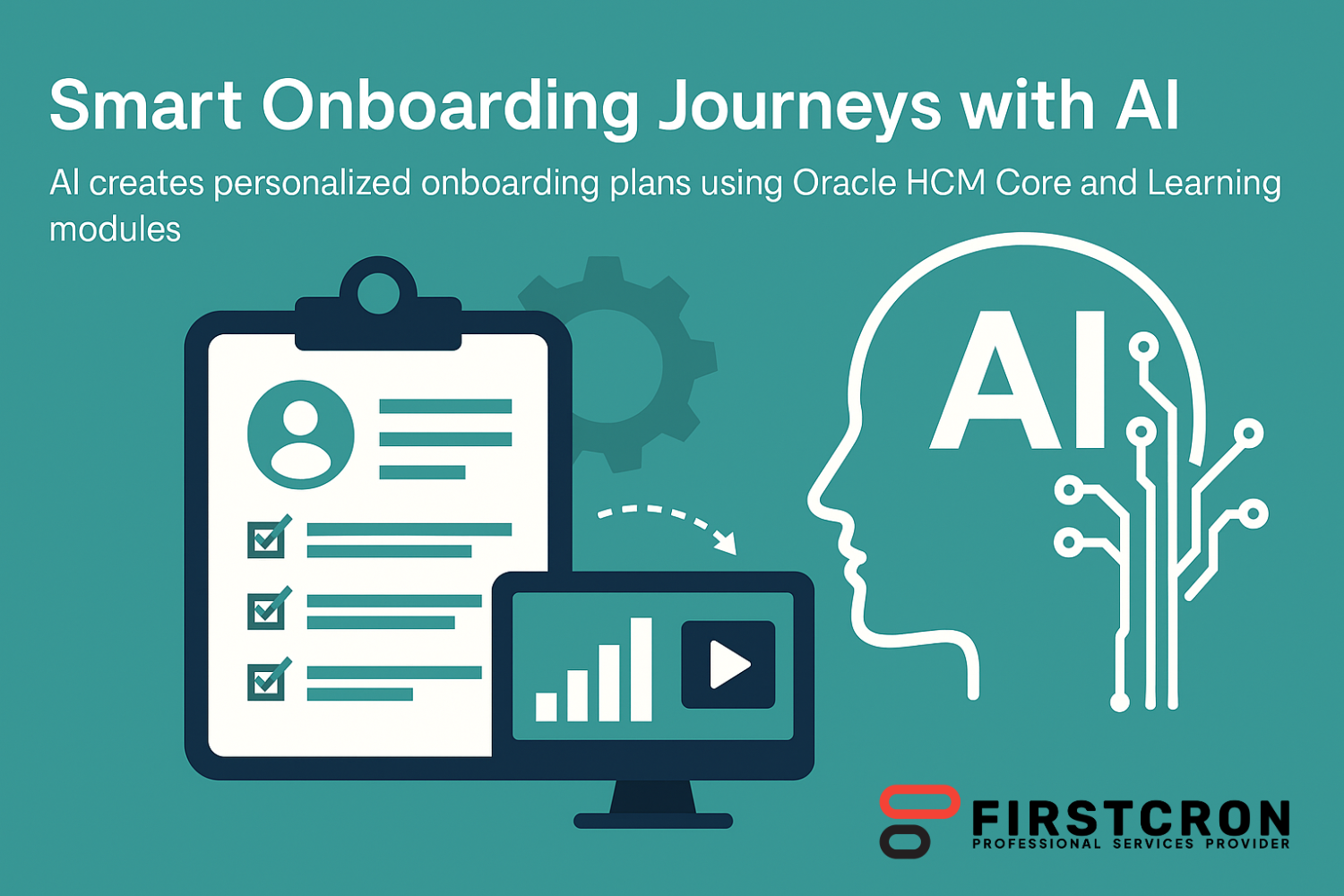
Smart Onboarding Journeys With AI: Personalized Employee Integration Through Oracle HCM Core And Learning
September 13th, 2025 21 min read
Future Proofing Enterprise Testing: The Role Of AI Driven Automation In Oracle Fusion
June 26th, 2025 7 min read