


Organizations are rapidly modernizing their technology ecosystems, moving from legacy databases, on-premise platforms, and outdated ERP systems to modern cloud architectures. Yet, despite strong business urgency, the biggest barrier to transformation remains data migration—often the most time-consuming, risky, and resource-heavy phase of any modernization program. Traditional ETL processes require extensive manual mapping, repetitive validations, error-prone transformations, and long development cycles. As the volume and complexity of data increase, migration timelines become unpredictable, exposing businesses to cost overruns and operational disruptions. Many enterprises struggle with rigid ETL tools that lack automation, cannot handle dynamic schema updates, or demand deep technical expertise. In this environment, the need for an accelerated, intelligent, and scalable migration engine has never been greater. Syntra’s ETL engine directly addresses these challenges by redesigning how data extraction, transformation, and loading are executed across modern enterprise landscapes.
In this blog we’ll cover
Syntra’s Intelligent ETL Engine: Redefining Speed And Accuracy
Syntra’s accelerated ETL engine is built on a modern automation-first architecture that eliminates the traditional bottlenecks of data migration. Instead of relying on manual coding for every transformation rule, Syntra provides dynamic mapping capabilities, auto-generated scripts, and reusable transformation templates tailored to diverse source systems. Its metadata-driven approach ensures that the engine adapts seamlessly to schema variations without rework, significantly reducing development effort. Built-in validation rules detect anomalies early, while automated profiling provides instant visibility into data quality. The engine supports parallel processing, enabling large datasets to be extracted, transformed, and loaded simultaneously rather than sequentially. By consolidating transformation logic, metadata intelligence, and execution workflows into a single platform, Syntra enables organizations to shorten ETL cycles dramatically—all while increasing accuracy, reliability, and auditability.
Accelerated Development Through Reusable Components And Automation
A major contributor to Syntra’s ability to reduce migration timelines by up to 60% is its extensive library of pre-built connectors, transformation rules, and reusable ETL components. Instead of starting from scratch for every project, teams can apply Syntra’s ready-made logic for common modules such as Finance, HR, Supply Chain, CRM, or industry-specific data domains. These reusable components eliminate duplicate effort, reduce dependency on specialized ETL developers, and ensure consistency across multiple migration waves. Automation features such as auto-mapping, rule inheritance, change detection, and automated data lineage drastically reduce the time spent on manual configuration and impact analysis. Syntra also enables continuous synchronization of data during project phases, preventing last-minute discrepancies between source and target systems. This reusable, automation-centered approach ensures that even complex migrations run efficiently, with minimal rework and predictable delivery timelines.
Ensuring High Data Quality With End-to-End Validation Intelligence
Speed alone is not enough—data must be clean, accurate, and business-ready before it moves into the target platform. Syntra’s ETL engine embeds validation checkpoints throughout the migration pipeline, ensuring data quality is maintained at every step. From automated deduplication and referential integrity checks to business-rule validations and exception reporting, Syntra ensures that errors are caught early and resolved quickly. Its real-time dashboards provide complete visibility into data health, transformation results, and load status, enabling functional SMEs to review and approve data before final migration. Syntra’s intelligent reconciliation engine compares source and target data at granular levels to verify completeness and accuracy, preventing costly go-live issues. With fully traceable logs, audit-ready reports, and exception workflows, organizations gain confidence that the migrated data meets compliance, governance, and operational standards. This focus on validation ensures stronger outcomes without extending project timelines.
Delivering Enterprise-Scale Migration At Lower Cost And Risk
By dramatically reducing development cycles, minimizing manual intervention, and enabling faster data readiness, Syntra’s ETL engine transforms migration economics. Organizations can execute large-scale migrations with smaller teams, fewer technical resources, and reduced project overhead. Faster timelines lead to decreased parallel-run costs, minimized disruption to business users, and earlier realization of cloud or ERP benefits. Syntra reduces risk through predictable ETL processes, automated error handling, and consistent transformation logic that prevents discrepancies between test cycles and go-live. Its scalability ensures that even large enterprises with multi-country data models can execute migrations faster and with greater accuracy. Whether modernizing ERP systems, consolidating applications, or transitioning from legacy on-premise platforms to cloud environments, Syntra reduces uncertainty and accelerates time-to-value—helping enterprises achieve their digital transformation milestones faster and with higher confidence.
Tags
Related Post
Navigating Oracle Fusion HCM & Payroll Patch 25C: Key Issues And Solutions For UK Local Councils
July 26th, 2025 10 min read
Learning And Talent Management With Cornerstone OnDemand
October 10th, 2025 17 min read

7 Proven Oracle Fusion Testing Principles To Guarantee Defect-Free Cloud Deployments
May 16th, 2025 15 min read
7 Reasons Why Companies Are Moving From Taleo To Oracle Recruiting Cloud
June 2nd, 2025 14 min read

Navigating Oracle Fusion HCM & Payroll Patch 25A: Key Considerations For UK Local Councils
July 27th, 2025 10 min read
WEEKEND READS
Learning And Talent Management With Cornerstone OnDemand
October 10th, 2025 17 min read
7 Reasons Why Companies Are Moving From Taleo To Oracle Recruiting Cloud
June 2nd, 2025 14 min read
UKG (Ultimate/Kronos) — USA And Global, Legacy-to-Modern Workforce Management
October 5th, 2025 23 min read

Data Migration Best Practices: From Taleo To Oracle Recruiting Cloud
May 28th, 2025 13 min read
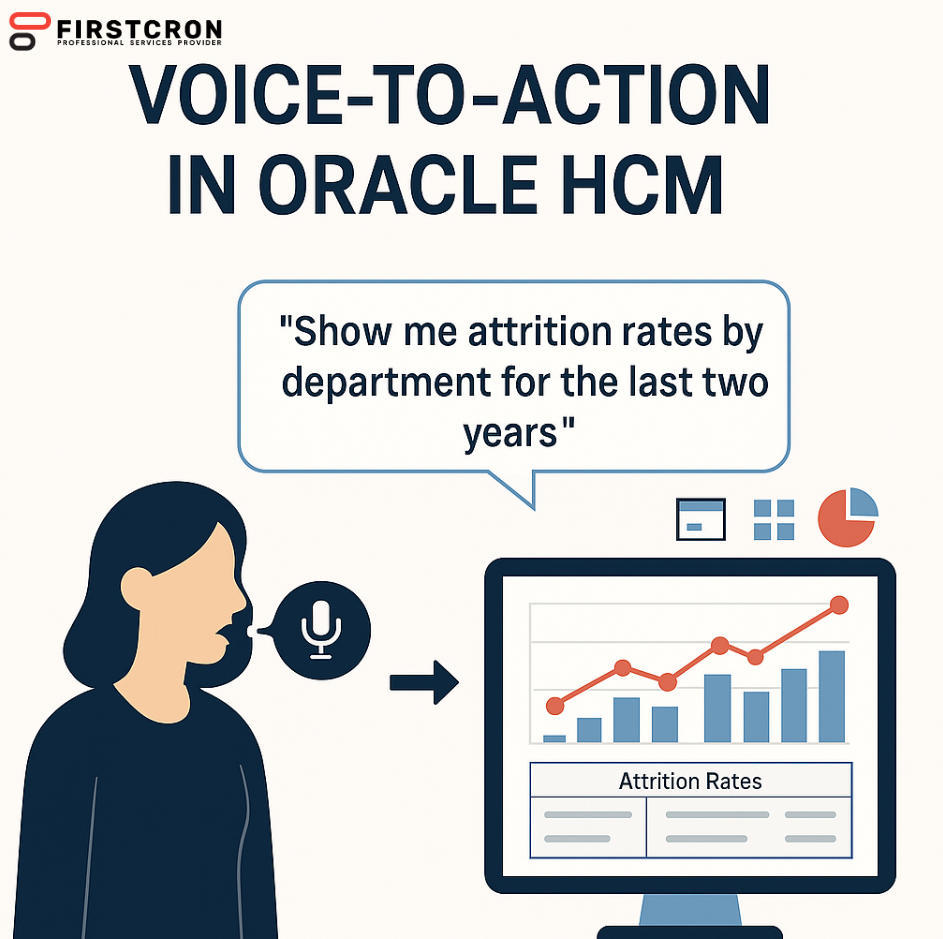
Voice-to-Action In Oracle HCM: Transforming HR Queries Into Intelligent Actions With GenAI
September 5th, 2025 23 min read
Understanding Oracle Fusion HCM And Payroll Patch 25B: Key Issues And Solutions For UK Local Councils
July 28th, 2025 10 min read
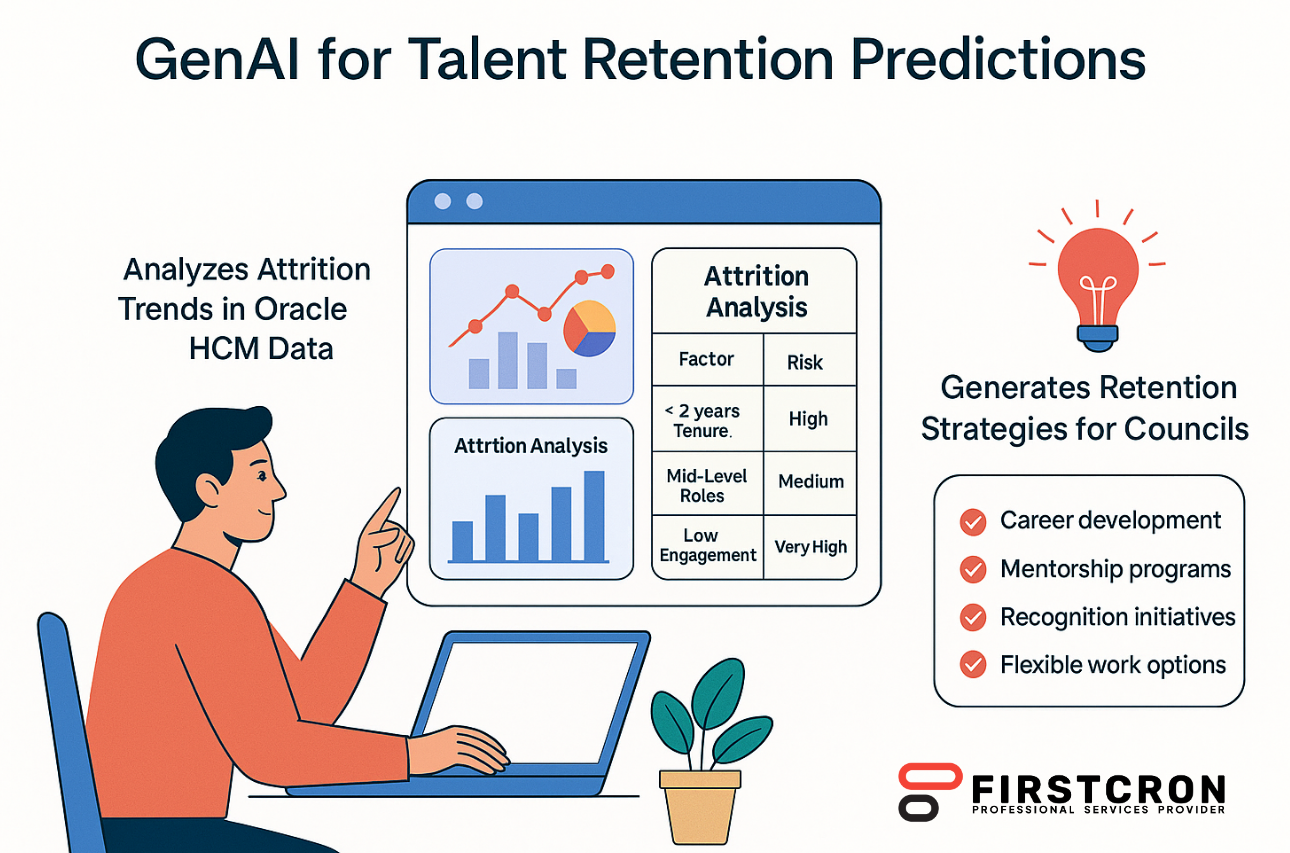
GenAI For Talent Retention Predictions: Unlocking Workforce Stability With Oracle HCM
September 4th, 2025 18 min read
Using IoT Devices For Workplace Safety Monitoring
November 9th, 2025 17 min read
Syntra-Powered ETL In A Ceridian Dayforce Landscape: Transforming ADP To Oracle Fusion For North American Payroll & HCM
October 4th, 2025 20 min read
Multi Country Payroll Provider
October 15th, 2025 20 min read