


Modern HR teams are under pressure to streamline recruitment, reduce manual interventions, and deliver a unified talent experience. Organizations still relying on Oracle Taleo often struggle with fragmented workflows, limited automation, and disconnected candidate experiences. Oracle Recruiting Cloud (ORC), with its native integration across HCM Cloud, offers a modern solution — but the migration journey can be complex without the right roadmap.This playbook breaks the Taleo-to-ORC transition into five practical sections, covering strategy, data, process alignment, integrations, and go-live readiness. Whether you’re preparing for a migration or already in the middle of one, this guide outlines the essential steps for a smooth and risk-free transformation.
In this blog we’ll cover
- Foundation & Readiness – Understanding The Migration Landscape
- Data Strategy – Cleansing, Mapping & Migrating Recruitment Data
- Process Alignment – Reimagining Recruiting In ORC
- Integrations & Orchestration – Aligning Upstream And Downstream Systems
- Testing, Cutover & Go-Live – Ensuring A Smooth Transition
- Conclusion
Foundation & Readiness – Understanding The Migration Landscape
Before any data is moved or configurations are touched, the first step is to establish strategic clarity. Taleo and ORC are fundamentally different platforms — Taleo is a standalone ATS, while ORC is embedded within Oracle HCM Cloud’s talent ecosystem. This impacts data structures, workflows, integrations, and reporting capabilities.
Start with a current-state assessment: inventory Taleo modules, candidate volumes, requisition patterns, user groups, and security roles. Identify which processes are standardized and which are heavily customized. Many Taleo implementations evolved organically over several years, so capturing business exceptions early is critical.
Next, map these findings to what ORC offers natively. Many Taleo customizations become redundant due to ORC’s built-in capabilities like embedded candidate screening, embedded digital assistant, and unified employee data. Use this stage to rationalize processes — don’t migrate unnecessary complexity.
Lastly, define your migration operating model: roles of functional teams, data SMEs, IT, integration owners, and change champions. Establish your cutover strategy now: Will you migrate historical data? How will you handle requisitions in flight? Early decisions here eliminate downstream confusion.
Data Strategy – Cleansing, Mapping & Migrating Recruitment Data
Data is the most sensitive and time-consuming element of Taleo to ORC migration. Taleo holds years of candidate applications, resumes, job requisitions, job offers, and communications. However, not all of it is needed in ORC.
Begin by defining data retention rules: what should move, what can be archived, and what must be purged due to compliance or internal governance. Many organizations choose a hybrid model — active and recent requisitions migrate into ORC, while older records remain in a searchable archive.
Once scope is finalized, build a structured data mapping framework. Taleo fields rarely align 1:1 with ORC; many require transformation, normalizing, or enrichment. For example, candidate source codes, job templates, and custom flex fields often need harmonization.
Cleansing is equally important. Taleo may contain duplicate profiles, inconsistent formats, outdated statuses, and missing mandatory data. A strong pre-migration validation engine — checking duplicates, invalid formats, missing attributes, and orphaned records — dramatically reduces load failures during ORC import.
For the migration itself, choose the right mechanism: HDL templates, HCM Extract-based loads, or a combination. Plan for multiple dry runs, especially for high-volume candidate data, to refine your mapping and validation rules. Finally, maintain a complete audit history — knowing what moved and what changed is essential for compliance and troubleshooting.
Process Alignment – Reimagining Recruiting In ORC
ORC is not just a replacement for Taleo; it is an opportunity to redesign recruitment to be more modern, automated, and candidate-centric. Begin with core process workshops that compare Taleo workflows to ORC’s native capabilities.
For requisition creation, ORC offers integrated job templates, position-based hiring, and rule-driven approvals using BPM workflows. Many Taleo steps can be eliminated due to ORC’s native job catalog and position hierarchy.
In candidate management, ORC’s embedded HCM data allows real-time talent visibility, automatically linking candidate and employee identities. Shortlisting, screening, interview scheduling, and offer management can be modernized using ORC features like automated assessments, dynamic interview panels, and digital offer acceptance.
Offer management especially benefits from ORC’s centralized comp data, eliminating manual Taleo integrations. Ensure alignment between HR, compensation, and recruiting teams during design, as ORC consolidates processes that were previously scattered.
Also evaluate security and roles. ORC uses HCM’s security model, which is role- and privilege-based. Taleo’s user types do not translate directly. Plan role design early, including provisioning rules, hiring manager access, recruiting specialist access, and country-specific segregation.
This stage is a chance to modernize, simplify, and future-proof.
Integrations & Orchestration – Aligning Upstream And Downstream Systems
Taleo operates with a legacy integration layer, often depending on custom connectors, SFTP transfers, and manually scheduled jobs. ORC, on the other hand, is API-driven and natively connected to HCM Core, Workforce Structures, and Talent modules.
Begin by identifying all integration touchpoints: background check vendors, job boards, assessment tools, identity providers, onboarding systems, payroll, and analytics. For each, determine whether the existing Taleo integration has an equivalent ORC connector or if a new API flow must be built.
Pay attention to job board integrations. ORC supports direct feeds to platforms such as LinkedIn and Indeed, but each requires configuration, authentication, and target settings. Where Taleo relied on custom scripts for job posting automation, ORC can often replace them with native features.
Candidate communication channels (emails, SMS, digital assistant messages) are also different in ORC. Review templates, triggers, and language packs carefully to ensure brand consistency post-migration.
For data orchestration, ensure you have a continuous sync mechanism, especially during dual-run periods. If Taleo and ORC operate in parallel temporarily, upstream position, job, and security data must stay aligned to avoid invalid requisition creation or mismatched candidate assignments.
A structured integration plan ensures ORC goes live smoothly without breaking dependent systems.
Testing, Cutover & Go-Live – Ensuring A Smooth Transition
Testing is where the migration succeeds or fails. Your testing strategy should include unit testing for data loads, configuration testing, end-to-end recruiting process testing, and integration testing with external systems.
Focus heavily on candidate journeys: application, screening, communication, interview coordination, offer creation, and onboarding. Ensure user acceptance testing includes hiring managers, recruiters, HR partners, and regional users. Their feedback on usability and workflow alignment is invaluable.
Cutover planning is a multi-step exercise. Freeze Taleo at the right moment, complete final data extraction, run last-mile cleansing, and execute the migration into ORC using validated HDL payloads. Maintain a detailed runbook covering timelines, owners, rollback criteria, and parallel validation steps.
Post-go-live, establish a hypercare model. Monitor job posting flows, candidate application volumes, background check integrations, and offer approvals. Tracking user feedback in the first three weeks helps quickly identify configuration gaps and training needs.
A well-structured cutover ensures minimal disruption to your hiring operations — often the most business-sensitive process in HR.
Conclusion
Migrating from Taleo to Oracle Recruiting Cloud is more than a technology upgrade — it is a transformation that modernizes talent acquisition, simplifies processes, and aligns recruiting with the broader HCM ecosystem. With the right strategy across data, processes, integrations, and cutover, organizations can unlock a future-ready recruitment engine that delivers better candidate experiences and measurable business value.
Tags
Related Post
Navigating Oracle Fusion HCM & Payroll Patch 25C: Key Issues And Solutions For UK Local Councils
July 26th, 2025 10 min read
Learning And Talent Management With Cornerstone OnDemand
October 10th, 2025 17 min read
7 Proven Oracle Fusion Testing Principles To Guarantee Defect-Free Cloud Deployments
May 16th, 2025 15 min read
7 Reasons Why Companies Are Moving From Taleo To Oracle Recruiting Cloud
June 2nd, 2025 14 min read
Navigating Oracle Fusion HCM & Payroll Patch 25A: Key Considerations For UK Local Councils
July 27th, 2025 10 min read
WEEKEND READS
Navigating Oracle Fusion HCM & Payroll Patch 25C: Key Issues And Solutions For UK Local Councils
July 26th, 2025 10 min read
7 Proven Oracle Fusion Testing Principles To Guarantee Defect-Free Cloud Deployments
May 16th, 2025 15 min read
7 Reasons Why Companies Are Moving From Taleo To Oracle Recruiting Cloud
June 2nd, 2025 14 min read
Navigating Oracle Fusion HCM & Payroll Patch 25A: Key Considerations For UK Local Councils
July 27th, 2025 10 min read
Driving Compliance And Security With Smart Testing In Oracle Fusion
June 5th, 2025 9 min read
How End-to-End Testing Of Oracle Fusion Enhances Operational Efficiency In Banking
May 23rd, 2025 11 min read
Data Migration Best Practices: From Taleo To Oracle Recruiting Cloud
May 28th, 2025 13 min read
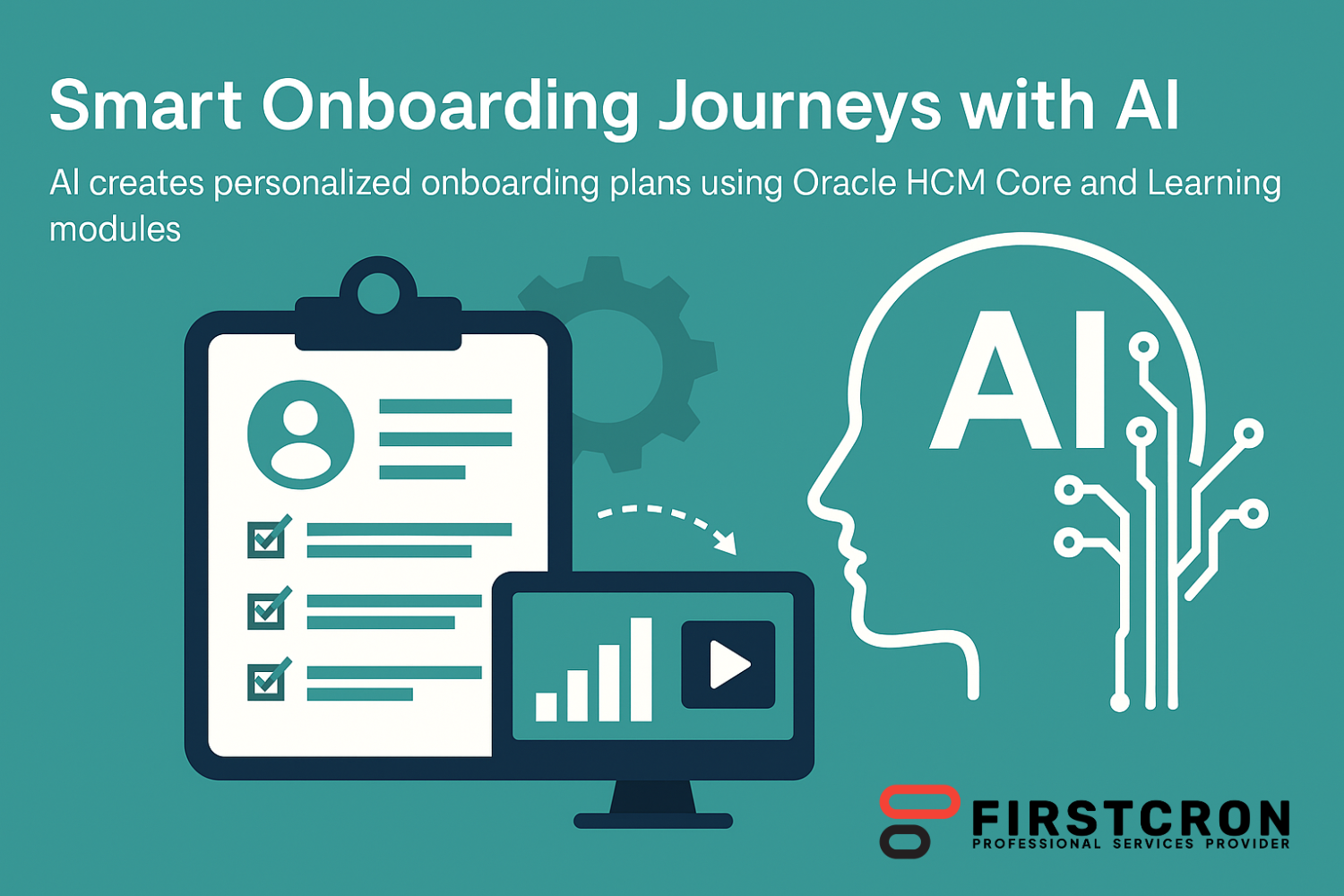
Smart Onboarding Journeys With AI: Personalized Employee Integration Through Oracle HCM Core And Learning
September 13th, 2025 21 min read
Smart Reporting In Oracle HCM: Use Natural Language To Build OTBI Queries
August 17th, 2025 20 min read