


Organizations today operate in an environment defined by rapid change, tighter compliance pressures, and heightened expectations for strategic decision-making. HR teams must navigate talent shortages, shifting workforce models, and constantly evolving employee expectations. Finance teams, meanwhile, are responsible for ensuring fiscal stability, forecasting accurately, and driving profitability. Historically, both functions have operated in silos, each using separate systems, metrics, and reporting frameworks. This fragmentation creates blind spots—HR decisions made without financial context may increase labor costs unnecessarily, while financial decisions made without people insights can hinder productivity and engagement. As companies seek greater agility, the convergence of HR and Finance data is no longer a luxury; it is an operational necessity. A unified data ecosystem enables leadership to identify patterns, trends, and risks that were previously buried in disconnected systems. The result is a more holistic picture of the organization, empowering smarter decisions across workforce planning, budgeting, and performance management.
In this blog we’ll cover
- Challenges Of Bridging HR And Finance Data
- How Syntra ETL Enables Seamless HR-Finance Data Convergence
- Strategic Insights Unlocked Through Unified HR-Finance Data
- Building A Future-Ready Data Ecosystem With Syntra
- Enhancing Compliance And Risk Management Through Integrated Data
- Accelerating Digital Transformation And Business Agility
Challenges Of Bridging HR And Finance Data
Despite the clear advantages, consolidating HR and Finance datasets is often a daunting challenge. The systems used by each function differ significantly in structure, purpose, and data formats. HR platforms typically deal with unstructured or semi-structured data related to employee demographics, performance, skills, and engagement, while Finance systems maintain highly structured data focused on costs, budgets, forecasts, and compliance. Integrating these two streams requires overcoming discrepancies in data definitions, quality standards, and update frequencies. For example, something as simple as an employee record can appear differently across systems—HR may track individuals by employee ID, while Finance might link labor expenses to cost centers. Without a unified integration approach, organizations face duplication, mismatched datasets, and inconsistencies that limit analytical value. Manual reconciliation efforts can take weeks, slowing processes such as workforce budgeting, headcount forecasting, or benefits cost modeling. These challenges highlight the need for a robust ETL solution that automates, standardizes, and streamlines data integration.
How Syntra ETL Enables Seamless HR-Finance Data Convergence
Syntra, the intelligent ETL platform available at syntra.firstcron.com, provides an advanced foundation for unifying HR and Finance data. Built with enterprise scalability and simplicity in mind, Syntra automates complex extract-transform-load processes that previously required significant manual effort or costly middleware solutions. Its pre-configured connectors allow seamless extraction from popular HRIS, payroll, ERP, and financial systems, regardless of data type or format. What sets Syntra apart is its transformation engine, which standardizes, cleans, and enriches data so that HR and Finance fields align perfectly. Syntra supports sophisticated mapping logic, enabling organizations to harmonize employee records, cost structures, and performance metrics into a single consistent model. This consistency is critical for accurate cross-functional analytics. With automated scheduling, incremental loads, and a secure cloud architecture, Syntra ensures that merged datasets remain continuously updated and reliable. As a result, organizations gain real-time visibility into workforce costs, financial impacts of HR policies, and trends that influence overall performance.
Strategic Insights Unlocked Through Unified HR-Finance Data
When HR and Finance data converge through a tool like Syntra, organizations unlock a level of insight that drives transformative business outcomes. Workforce analytics becomes far more powerful when headcount, salary, overtime, benefits, training investments, and performance ratings are analyzed alongside cost centers, budgets, and profitability indicators. For example, companies can identify which teams deliver the highest revenue per employee, or how turnover in critical roles affects operational costs. Budget forecasting becomes more accurate because it incorporates real-time workforce changes such as new hires, promotions, and attrition. HR initiatives—whether training programs, retention strategies, or organizational restructuring—can be directly tied to financial outcomes, enabling leadership to make evidence-based decisions. Syntra’s unified datasets support advanced modeling such as predictive turnover analysis, scenario-based budget planning, and profitability projections linked to workforce dynamics. These insights help executives optimize resource allocation, balance workforce productivity with cost efficiency, and prepare for future challenges with greater confidence. The synergy of HR and Finance intelligence enables a data-driven culture where decisions are proactive rather than reactive.
Building A Future-Ready Data Ecosystem With Syntra
As digital transformation accelerates, organizations must build an infrastructure that supports continuous improvement, real-time decision-making, and operational resilience. Syntra provides the backbone for this transformation by ensuring HR and Finance data flow seamlessly into analytics platforms, dashboards, and enterprise data warehouses. Its scalable architecture supports growth, whether a company expands geographically, adds new business units, or adopts new systems. More importantly, Syntra empowers both HR and Finance teams to collaborate using shared metrics and a single source of truth. This alignment improves workforce planning, helps manage costs more effectively, and strengthens long-term strategic execution. In a world where agility defines competitive advantage, organizations equipped with unified and timely insights are better prepared to navigate uncertainty. The convergence of HR and Finance data—powered by a robust ETL solution like Syntra—creates a future-ready data ecosystem that enhances transparency, strengthens governance, and unlocks new levels of performance. For organizations striving to be intelligent, efficient, and insight-driven, Syntra is the bridge that transforms data silos into strategic opportunity.
Enhancing Compliance And Risk Management Through Integrated Data
Regulatory compliance grows more complex each year, especially in areas involving payroll accuracy, workforce classifications, benefits administration, data privacy, and financial reporting. When HR and Finance operate with disjointed data, the risk of errors, omissions, or non-compliance increases significantly. By centralizing data through Syntra, organizations gain clearer audit trails, standardized reporting, and automated validations that reduce compliance-related risks. Syntra’s unified data pipelines ensure that any updates in HR records—such as job roles, compensation changes, or employment status—flow consistently into financial datasets, minimizing discrepancies. This not only simplifies audits but also strengthens internal controls, giving compliance teams greater confidence in the accuracy and integrity of organizational data.
Accelerating Digital Transformation And Business Agility
In an era where digital transformation defines competitive leaders, organizations must rely on platforms that support continuous innovation and rapid adaptation. Syntra accelerates this journey by enabling seamless data movement and integration across both HR and Finance systems. Its flexible ETL engine allows organizations to onboard new technologies, adopt cloud solutions, or restructure internal processes without disrupting data flows. With timely, accurate, and unified data available across the enterprise, decision-makers can respond faster to market changes, optimize operational efficiency, and scale initiatives with minimal friction. The result is an agile organization capable of transforming insights into action, supported by an integration foundation that grows with the business.
Tags
Related Post
Navigating Oracle Fusion HCM & Payroll Patch 25C: Key Issues And Solutions For UK Local Councils
July 26th, 2025 10 min read
Learning And Talent Management With Cornerstone OnDemand
October 10th, 2025 17 min read
7 Proven Oracle Fusion Testing Principles To Guarantee Defect-Free Cloud Deployments
May 16th, 2025 15 min read
7 Reasons Why Companies Are Moving From Taleo To Oracle Recruiting Cloud
June 2nd, 2025 14 min read
Navigating Oracle Fusion HCM & Payroll Patch 25A: Key Considerations For UK Local Councils
July 27th, 2025 10 min read
WEEKEND READS
Navigating Oracle Fusion HCM & Payroll Patch 25C: Key Issues And Solutions For UK Local Councils
July 26th, 2025 10 min read
Learning And Talent Management With Cornerstone OnDemand
October 10th, 2025 17 min read
7 Reasons Why Companies Are Moving From Taleo To Oracle Recruiting Cloud
June 2nd, 2025 14 min read
Navigating Oracle Fusion HCM & Payroll Patch 25A: Key Considerations For UK Local Councils
July 27th, 2025 10 min read
UKG (Ultimate/Kronos) — USA And Global, Legacy-to-Modern Workforce Management
October 5th, 2025 23 min read
How End-to-End Testing Of Oracle Fusion Enhances Operational Efficiency In Banking
May 23rd, 2025 11 min read
Data Migration Best Practices: From Taleo To Oracle Recruiting Cloud
May 28th, 2025 13 min read
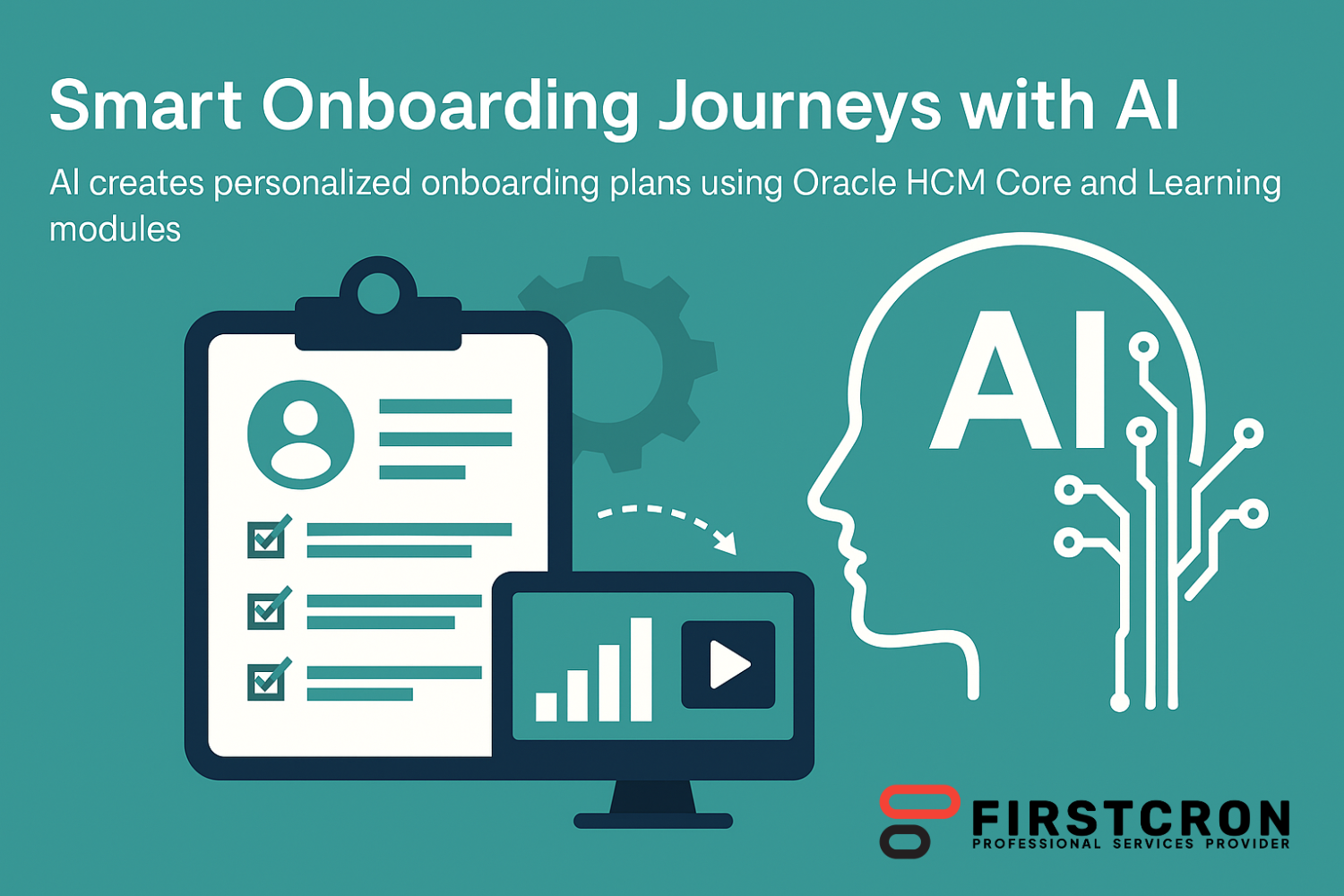
Smart Onboarding Journeys With AI: Personalized Employee Integration Through Oracle HCM Core And Learning
September 13th, 2025 21 min read
Smart Reporting In Oracle HCM: Use Natural Language To Build OTBI Queries
August 17th, 2025 20 min read