


In 2020, hybrid work was a reaction. By 2023, it had become a trend. In 2025, it is finally a designed system: a deliberate blend of policy, data, and technology that defines how organizations actually run.For HR, payroll, and operations teams, this shift is more than a change in attendance patterns. It rewires how employment data is captured, how time is valued, and how compliance is enforced across geographies and work modes. The companies that are getting hybrid work right in 2025 are not the ones with the most flexible policies; they are the ones with the cleanest data foundations and the tightest integration between HR, payroll, and finance.This is exactly where a governed ETL layer like Syntra by FirstCron becomes part of the hybrid work conversation. When your workforce is everywhere, your data can’t be all over the place.
In this blog we’ll cover
- What “Hybrid Work Policy” Really Means In 2025
- The Data Reality Behind Hybrid Work
- Why ETL Intelligence Is Now Part Of HR Strategy
- Designing Hybrid Policies With Data In Mind
- Hybrid Work, Payroll Accuracy, And Employee Trust
- The Hybrid Enterprise: Multiple Systems, One Source Of Truth
- Governance, Security, And Compliance In A Hybrid World
- The Next Step: Hybrid Work As A Data-Driven Advantage
What “Hybrid Work Policy” Really Means In 2025
A few years ago, hybrid policy typically meant one line: “Three days in office, two days remote.” Today, the same phrase hides a lot more complexity.
In 2025, a hybrid work policy usually combines location rules, time rules, and compliance rules. It defines: where work can be performed, which jobs or grades have what level of flexibility, how time is recorded for payroll and costing, how allowances and benefits are applied, and how these choices connect to legal, tax, and audit expectations.
This turns hybrid work from a cultural perk into a data-driven policy artifact. Every parameter you write into policy—such as remote eligibility, office days, or cross-state working—eventually appears somewhere in your HR or payroll datasets. If your systems are not aligned, hybrid work can quietly become a source of payroll errors, misaligned costing, or even regulatory risk.
The Data Reality Behind Hybrid Work
Hybrid work changes the shape of your data before it changes the shape of your office. Once employees start moving between locations, time zones, and cost centers, all the following data domains start to shift:
Employment and assignments adjust to reflect location-based rules, local entities, and remote work arrangements. Compensation and benefits need rules for remote allowances, travel reimbursements, or location-based pay ranges. Time and attendance becomes more granular, with flexible hours, asynchronous collaboration, and different overtime regimes across jurisdictions. Tax and compliance attributes must track where work is actually performed, not just where the company is headquartered.
If those data points live in multiple systems—time tracking in one place, payroll in another, HCM somewhere else—the complexity multiplies quickly. Manual clean-up is no longer sustainable, especially when your hybrid workforce scales across states or countries.
In other words, the evolution of hybrid work policies is inseparable from the evolution of your integration strategy.
Why ETL Intelligence Is Now Part Of HR Strategy
Traditionally, ETL sounded like a technical term reserved for IT or data teams. Hybrid work has pushed it straight into the HR and payroll agenda. When every policy decision translates into a combination of codes, dates, and rules, the way you extract, transform, and load that information becomes a strategic control point.
Platforms like Syntra provide a structured ETL layer that connects payroll engines such as ADP with enterprise systems like Oracle Fusion. Instead of exporting spreadsheets, reformatting files, and hoping the load passes, organizations can embed transformation logic into a governed pipeline.
In a hybrid work setting, this matters because:
Data must reflect reality faster. Hybrid policies often evolve quarterly, not every five years. Transformation rules have to keep up with new locations, new cost segments, and new benefit structures.
Validation is non-negotiable. Remote, hybrid, and on-site employees might be governed under different rules even inside the same legal entity. ETL checks need to spot misaligned tax jurisdictions, inconsistent assignment data, or missing costing before they reach payroll close.
Audit trails are more important than ever. Regulators and auditors increasingly expect traceability. A structured ETL layer gives you a documented view of how data moved, how it was transformed, and why it landed in a specific configuration.
Hybrid work has made data movement a first-class HR process, not just a background technical task.
Designing Hybrid Policies With Data In Mind
The most mature organizations in 2025 don’t write hybrid work policies in isolation and then “figure out the data later.” They design policies with their systems and integration landscape in mind.
That means thinking about how each clause in the policy gets implemented downstream. When you decide that certain grades can work fully remote in specific states, you also define how legal employer data, costing segments, and tax attributes need to be structured. When you introduce different hybrid patterns for different business units, you implicitly define requirements for job, position, and department mappings in your HCM and payroll integrations.
A platform like Syntra is designed for this reality. It can absorb HR and payroll data from ADP, transform it to match the expectations of Oracle Fusion, and ensure each hybrid rule is reflected correctly in the underlying objects—whether that is person records, assignments, tax cards, cost centers, or payroll elements.
The outcome is a policy that is not only well-worded but operationally enforceable, because your data infrastructure knows how to interpret it.
Hybrid Work, Payroll Accuracy, And Employee Trust
Hybrid work policies live or die on trust. Employees might accept different patterns, but they will not accept confusion around pay, time, or benefits. If your data is messy, hybrid working becomes associated with errors: wrong overtime calculations, missing allowances, or inconsistent leave balances.
In 2025, employees expect:
Clear reflection of their work arrangement in systems, including correct location, entity, and schedule. Accurate payroll regardless of whether they are in-office, remote, or traveling. Transparent explanations when policies change and how that affects their compensation or tax position.
For employers, this translates into a requirement for stable, repeatable data processes. Syntra’s ETL approach supports this by introducing validation checkpoints, mapping logic, and format controls before data reaches Oracle Fusion. When hybrid work expands, the volume of changes grows, but the framework for handling those changes remains consistent.
Payroll accuracy becomes a visible proof that your hybrid work model is under control.
The Hybrid Enterprise: Multiple Systems, One Source Of Truth
By 2025, many organizations are living in true hybrid environments—not only in work location terms, but also in systems. ADP may handle payroll across regions, Oracle Fusion may serve as the global HCM or ERP, and other tools may cover time, benefits, or regional solutions.
Hybrid work flourishes when those systems behave as a single ecosystem, not as disconnected islands. Data about where an employee works, which policy they fall under, and how their time is valued must flow cleanly through the chain.
This is where Syntra’s ETL intelligence plays an enabling role. It standardizes and repurposes data from source systems into structured outputs that Oracle Fusion can consume, while respecting regional rules, effective dating, and hybrid patterns. As new locations, entities, or hybrid policy variants appear, transformation rules can be adjusted within Syntra rather than rebuilding integrations from scratch.
The result is a hybrid enterprise where the policy layer and data layer move in step.
Governance, Security, And Compliance In A Hybrid World
Hybrid work has also expanded the security and compliance surface area. More locations, more networks, more devices, and more regulatory expectations create a new kind of operational risk. The same applies to HR and payroll data: as it crosses more systems and geographies, governance becomes critical.
FirstCron’s approach, and specifically Syntra’s architecture, is grounded in governed ETL. Instead of ad hoc scripts and undocumented spreadsheets, organizations adopt a controlled pipeline with clear authorization, monitoring, and logging. For hybrid work, this means:
Stronger control over sensitive data as it moves between payroll and HCM systems. Better ability to respond to audits by demonstrating how hybrid-related attributes are handled and validated. Confidence that changes in policy are consistently reflected in transformation logic, rather than implemented manually in a handful of files.
Hybrid work in 2025 is not only about flexibility; it is also about assurance. A governed ETL layer is one of the key levers to provide that assurance at scale.
The Next Step: Hybrid Work As A Data-Driven Advantage
As hybrid work policies continue to evolve, the gap between reactive and proactive organizations is widening. Reactive teams treat hybrid work as a calendar issue—who is in on which day. Proactive teams treat hybrid work as a data design challenge that shapes how they integrate systems, map objects, and ensure compliance.
FirstCron, through platforms like Syntra, sits precisely at that intersection. By combining ETL intelligence with deep understanding of HR and payroll data, it helps enterprises turn hybrid work from a source of friction into an operational advantage.
In 2025 and beyond, the most resilient hybrid organizations will be those that align three layers: thoughtful policy, clean data, and governed ETL. When those pieces are in place, hybrid work stops being something you “manage around” and becomes a scalable, predictable, and compliant way of running your workforce.
Tags
Related Post
Navigating Oracle Fusion HCM & Payroll Patch 25C: Key Issues And Solutions For UK Local Councils
July 26th, 2025 10 min read
Learning And Talent Management With Cornerstone OnDemand
October 10th, 2025 17 min read
7 Proven Oracle Fusion Testing Principles To Guarantee Defect-Free Cloud Deployments
May 16th, 2025 15 min read
7 Reasons Why Companies Are Moving From Taleo To Oracle Recruiting Cloud
June 2nd, 2025 14 min read
Navigating Oracle Fusion HCM & Payroll Patch 25A: Key Considerations For UK Local Councils
July 27th, 2025 10 min read
WEEKEND READS
Learning And Talent Management With Cornerstone OnDemand
October 10th, 2025 17 min read
UKG (Ultimate/Kronos) — USA And Global, Legacy-to-Modern Workforce Management
October 5th, 2025 23 min read
5 Business Benefits Of Investing In AI-Powered Performance Oracle Fusion Testing
May 5th, 2025 11 min read
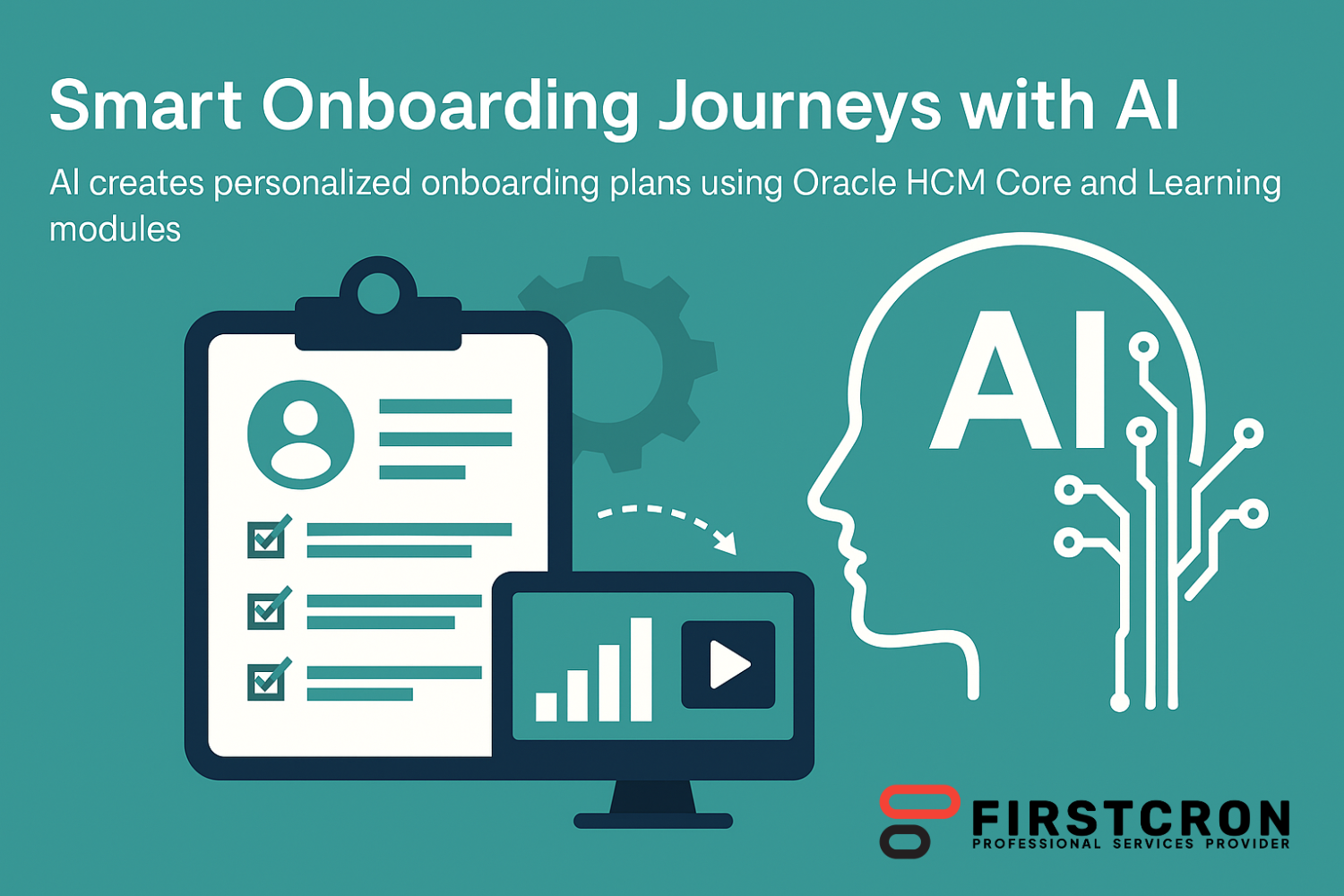
Smart Onboarding Journeys With AI: Personalized Employee Integration Through Oracle HCM Core And Learning
September 13th, 2025 21 min read

Future Proofing Enterprise Testing: The Role Of AI Driven Automation In Oracle Fusion
June 26th, 2025 7 min read
How Cloud-Based Testing With Firstcron Can Improve Your Business
June 9th, 2025 12 min read
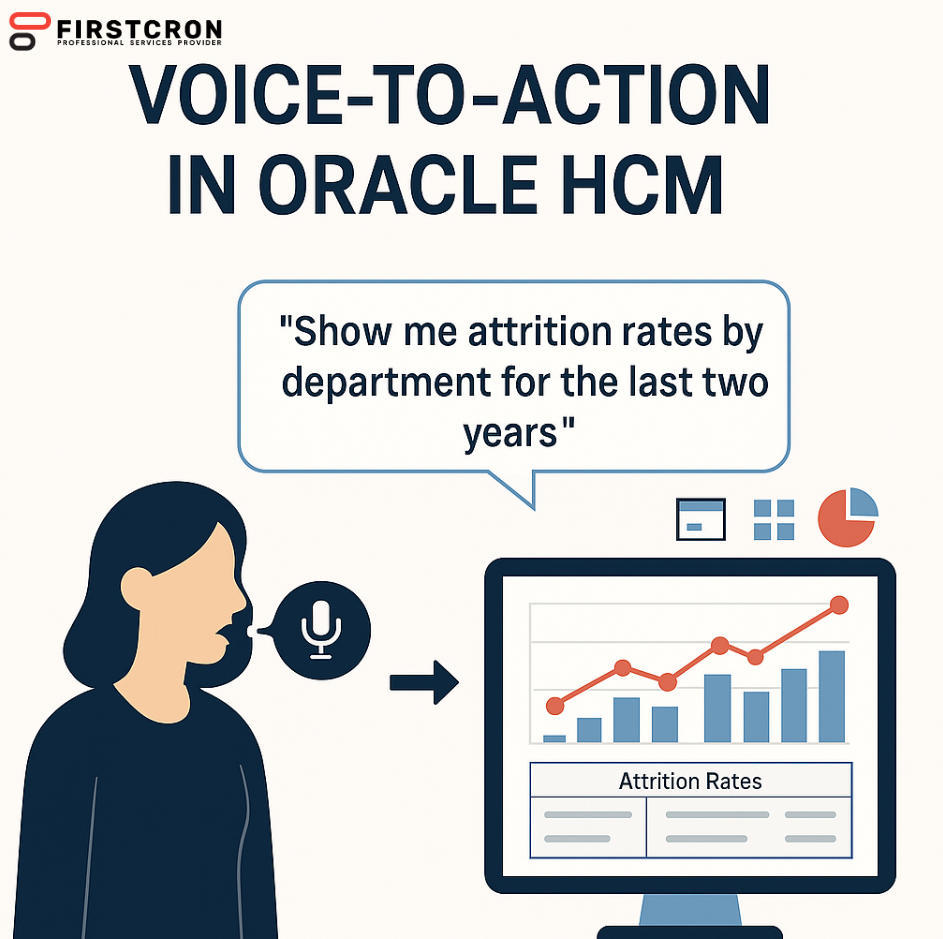
Voice-to-Action In Oracle HCM: Transforming HR Queries Into Intelligent Actions With GenAI
September 5th, 2025 23 min read
Redwood Readiness Checklist
July 23rd, 2025 7 min read
Automating Payslip Anomaly Detection With Natural Language Insights In Oracle ERP For The Public Sector
August 27th, 2025 24 min read
FusionCheck: Your Smart Solution For Scalable Business Success
May 8th, 2025 9 min read