


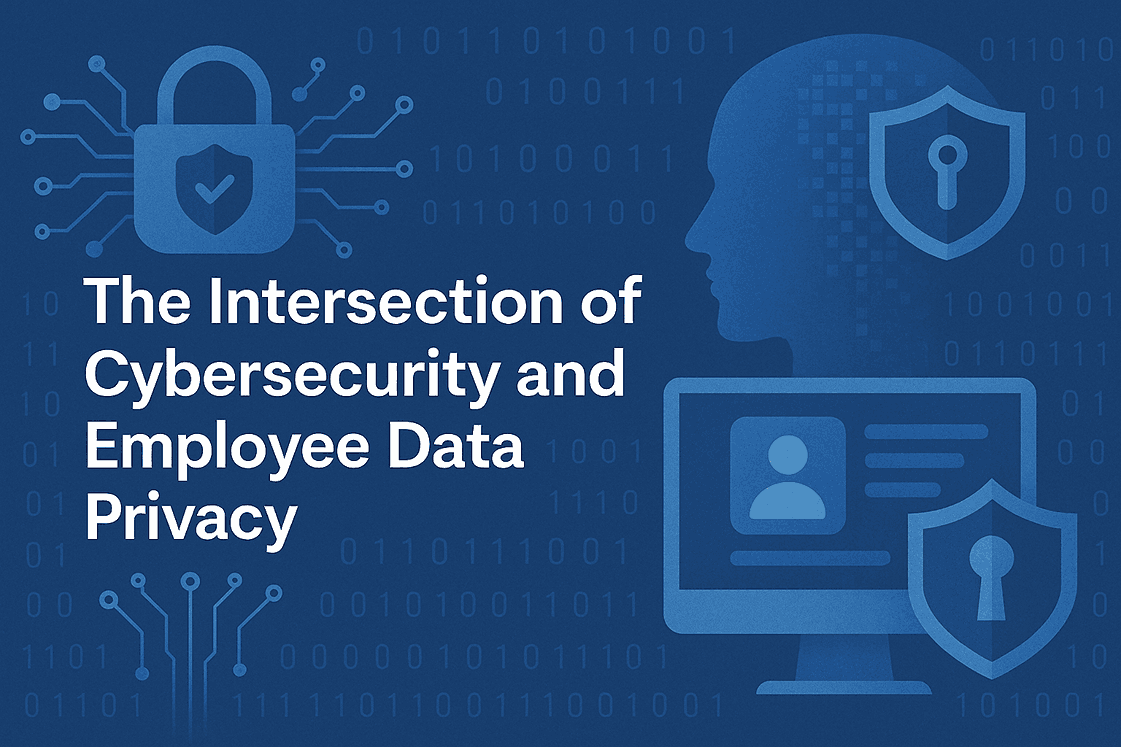
In today’s hyper-connected business environment, the lines between cybersecurity and employee data privacy have never been more blurred. Organizations rely heavily on digital systems to manage sensitive employee information — from payroll data and performance metrics to health records and behavioral analytics. However, the same data that empowers smarter workforce management also poses significant risks if not properly protected.
In this blog we’ll cover
- The New Landscape Of Employee Data Security
- Where Cybersecurity And Privacy Converge
- AI And Automation: Dual-Edged Tools In Data Protection
- Governance, Risk, And Compliance: The Three Pillars
- Human Element: Training And Awareness
- Syntra: Enabling Secure Data Intelligence
- Ethical Data Stewardship In The Age Of AI
- The Future: Integrated Security And Human Trust
- Conclusion: Protecting People And Information Equally
The New Landscape Of Employee Data Security
Digital transformation has made employee data more accessible, but also more vulnerable. With the rise of cloud-based HR platforms, hybrid work environments, and AI-driven analytics, organizations now store unprecedented volumes of personal and professional data.
This has expanded the attack surface for cybercriminals, who increasingly target HR systems for identity theft and fraud. Breaches involving employee data can lead not only to financial losses but also reputational damage and regulatory penalties under frameworks like GDPR, CCPA, and ISO 27001.
Where Cybersecurity And Privacy Converge
While cybersecurity focuses on protecting systems and networks from external threats, data privacy ensures that personal information is collected, stored, and used responsibly. The intersection of these two disciplines forms the foundation of a trustworthy digital workplace.
Effective integration means security policies are designed with privacy in mind — ensuring that protective measures do not infringe on individual rights. For example, encryption and access control safeguard employee data, while transparent consent protocols and anonymization uphold ethical use.
AI And Automation: Dual-Edged Tools In Data Protection
Artificial intelligence and automation have revolutionized threat detection, enabling real-time monitoring of suspicious activities. Machine learning models can identify unusual login patterns, detect data exfiltration attempts, and respond autonomously to mitigate breaches.
However, the same technologies can also raise ethical concerns if used for excessive employee monitoring or intrusive analytics. Responsible implementation requires clear governance and transparency about how employee data is collected and analyzed.
Platforms like Syntra (syntra.firstcron.com) support this balance by offering ETL-driven data integration — allowing organizations to securely extract, transform, and analyze HR data while maintaining strict compliance and privacy boundaries.
Governance, Risk, And Compliance: The Three Pillars
A mature cybersecurity-privacy framework is built on Governance, Risk, and Compliance (GRC) principles. Governance defines accountability; risk management identifies vulnerabilities; and compliance ensures adherence to legal standards.
Modern digital tools automate compliance workflows, flag potential violations, and ensure consistent data handling across HR and IT ecosystems. By aligning cybersecurity strategy with privacy policies, organizations can create a unified defense posture that anticipates both external and internal risks.
Human Element: Training And Awareness
Despite technological advancements, humans remain both the strongest and weakest link in the security chain. Phishing, password reuse, and mishandling of sensitive files continue to account for a majority of breaches.
To counter this, organizations must invest in continuous security awareness training — helping employees recognize threats and understand the implications of data privacy. The goal is not surveillance, but empowerment — cultivating a culture of shared responsibility where every individual contributes to collective digital resilience.
Syntra: Enabling Secure Data Intelligence
For organizations managing vast amounts of employee data, Syntra’s ETL capabilities provide a secure bridge between data systems and analytics platforms. By automating data flows with built-in encryption, access control, and audit trails, Syntra ensures that privacy and security coexist seamlessly.
It allows HR leaders to gain real-time workforce insights — such as attrition trends, engagement analytics, or skill forecasting — without compromising data integrity or compliance. This creates an ecosystem where decision-making is informed, ethical, and secure.
Ethical Data Stewardship In The Age Of AI
Beyond regulatory compliance, true digital maturity involves ethical data stewardship. This means respecting employee autonomy, ensuring informed consent, and applying privacy-by-design principles in every HR technology deployment.
Organizations must establish clear policies on what data is collected, who can access it, and how long it is retained. By being transparent, they can foster trust and position themselves as responsible custodians of employee information.
The Future: Integrated Security And Human Trust
As cyber threats become more sophisticated and digital work environments expand, cybersecurity and employee data privacy will increasingly converge. The future lies in intelligent, adaptive systems that combine real-time protection with ethical data governance.
AI-driven platforms, powered by secure ETL solutions like Syntra, will enable organizations to predict threats, protect employee identities, and preserve trust — forming the backbone of the modern digital workplace.
Conclusion: Protecting People And Information Equally
At the intersection of cybersecurity and employee data privacy lies the promise of a safer, more transparent workplace. Technology alone cannot secure this future — it requires a holistic approach where human values and digital defenses align.
By embedding privacy into every layer of cybersecurity strategy, organizations can build trust, resilience, and sustainability in an era defined by data. In the end, protecting employee data isn’t just about security — it’s about respect, responsibility, and the future of ethical digital work.
Tags
Related Post
Navigating Oracle Fusion HCM & Payroll Patch 25C: Key Issues And Solutions For UK Local Councils
July 26th, 2025 10 min read
Learning And Talent Management With Cornerstone OnDemand
October 10th, 2025 17 min read
7 Proven Oracle Fusion Testing Principles To Guarantee Defect-Free Cloud Deployments
May 16th, 2025 15 min read
7 Reasons Why Companies Are Moving From Taleo To Oracle Recruiting Cloud
June 2nd, 2025 14 min read
Navigating Oracle Fusion HCM & Payroll Patch 25A: Key Considerations For UK Local Councils
July 27th, 2025 10 min read
WEEKEND READS
Learning And Talent Management With Cornerstone OnDemand
October 10th, 2025 17 min read
Navigating Oracle Fusion HCM & Payroll Patch 25A: Key Considerations For UK Local Councils
July 27th, 2025 10 min read
UKG (Ultimate/Kronos) — USA And Global, Legacy-to-Modern Workforce Management
October 5th, 2025 23 min read
Driving Compliance And Security With Smart Testing In Oracle Fusion
June 5th, 2025 9 min read
5 Business Benefits Of Investing In AI-Powered Performance Oracle Fusion Testing
May 5th, 2025 11 min read
Future Proofing Enterprise Testing: The Role Of AI Driven Automation In Oracle Fusion
June 26th, 2025 7 min read
How Cloud-Based Testing With Firstcron Can Improve Your Business
June 9th, 2025 12 min read
Voice-to-Action In Oracle HCM: Transforming HR Queries Into Intelligent Actions With GenAI
September 5th, 2025 23 min read
Testing Oracle Financials: Ensuring Accuracy In Your Critical Transactions
June 19th, 2025 8 min read
Automated GDPR Compliance Checks: How GenAI Validates Oracle HCM Extracts And Reports
September 14th, 2025 20 min read